 by
by “AI can spot a pattern in a photo. It cannot feel a lump, ask the right follow-up question, or take responsibility for a wrong call. That is still a doctor’s job.”
AI skin analysis has become a routine feature in beauty apps, smart mirrors and clinic consultations across the UAE. You upload a selfie, an algorithm scores your pores, pigmentation, wrinkles and redness, and within seconds you get a “skin age” and a product list. The experience is smooth, private and free. It also raises a fair question: if the software is this confident, do you still need a dermatologist?
The short answer from clinicians in Dubai and Abu Dhabi is no, not yet, and probably not ever in the full sense. AI is a genuinely useful tool for screening and tracking, but medical diagnosis involves things a camera cannot see.
How AI skin analysis actually works
Most consumer tools rely on convolutional neural networks trained on tens of thousands of labelled skin images. The model learns to associate visual patterns, colour, texture, symmetry, with categories a dermatologist previously tagged: acne grade, melasma, rosacea, sun damage, seborrheic keratosis, and so on. Newer clinical systems layer in multispectral imaging, UV light, and 3D surface mapping to see beneath the surface of the skin.
The results can be impressive. A 2017 study in Nature showed a deep learning model matching board-certified dermatologists at classifying certain skin cancers from photographs alone. Since then, clinic-grade platforms like VISIA, Observ 520 and various hospital research tools have made structured skin analysis part of a normal aesthetic consultation in the UAE.
Where AI does well:
- Consistency. The same photo scored twice returns the same result. Human graders drift, especially at the end of a long clinic day.
- Tracking change over time. Side-by-side comparisons of pigmentation, pore count or wrinkle depth after treatment are far more objective than memory.
- Triage. Apps can flag a lesion as “worth showing a doctor” and push people toward a real appointment sooner.
- Product matching. For routine concerns like dryness or oiliness, algorithm-driven recommendations are often reasonable.
Where it still stumbles: rare conditions, atypical presentations, anything hidden by makeup or poor lighting, and any skin problem that needs touch, medical history, or lab work to confirm.
AI vs dermatologist: five honest comparisons
Here is how the two approaches stack up on the questions that matter to patients in the UAE.
- Accuracy. For clear, common conditions photographed in good light, top AI models perform comparably to general practitioners and sometimes approach dermatologist-level accuracy. For unusual presentations, dark or inflamed skin, or lesions that need palpation, accuracy drops sharply. A dermatologist also uses a dermatoscope, personal history and, when needed, a biopsy, none of which an app can replicate.
- Skin tone bias. This is the big one. Most public training datasets are dominated by lighter Fitzpatrick I to III skin. Studies including work summarised by the American Academy of Dermatology have shown lower accuracy on darker skin tones, exactly the demographic mix you see across the UAE, GCC and South Asian residents. Some conditions like melasma, keloids and post-inflammatory hyperpigmentation are systematically under-represented, which means an app may miss or misclassify them.
- Privacy. A selfie is biometric data. Where does it go, who stores it, and for how long? Under the UAE Personal Data Protection Law (Federal Decree-Law No. 45 of 2021), facial images are sensitive personal data, and consent must be explicit. Free apps that ship photos overseas for processing are a real concern. A licensed clinic in Dubai or Abu Dhabi is bound by DHA or DoH rules on medical records.
- Ethics and accountability. If an AI misses a melanoma, who is responsible: the developer, the clinic that deployed it, or the patient who trusted the score? Regulation is still catching up. A dermatologist, on the other hand, carries a licence and legal duty of care.
- The future. Expect hybrid workflows: AI does the first screen and the objective measurements, the doctor does the interpretation, the plan and the procedure. This is already how top clinics run skin analysis alongside treatments like body sculpting dubai patients often ask about, using imaging to establish baselines and measure progress rather than to replace the clinician.
Why AI should support, not replace, a medical consultation
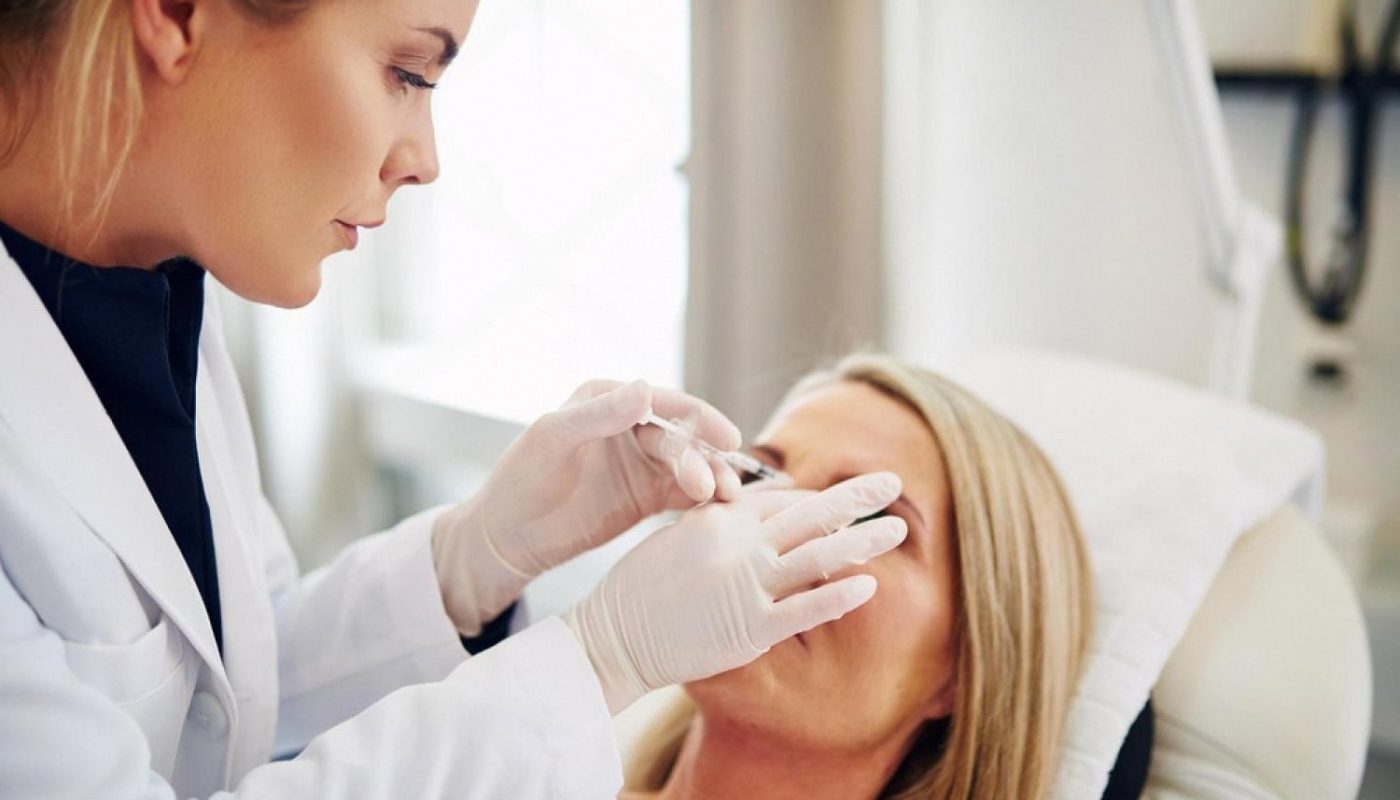
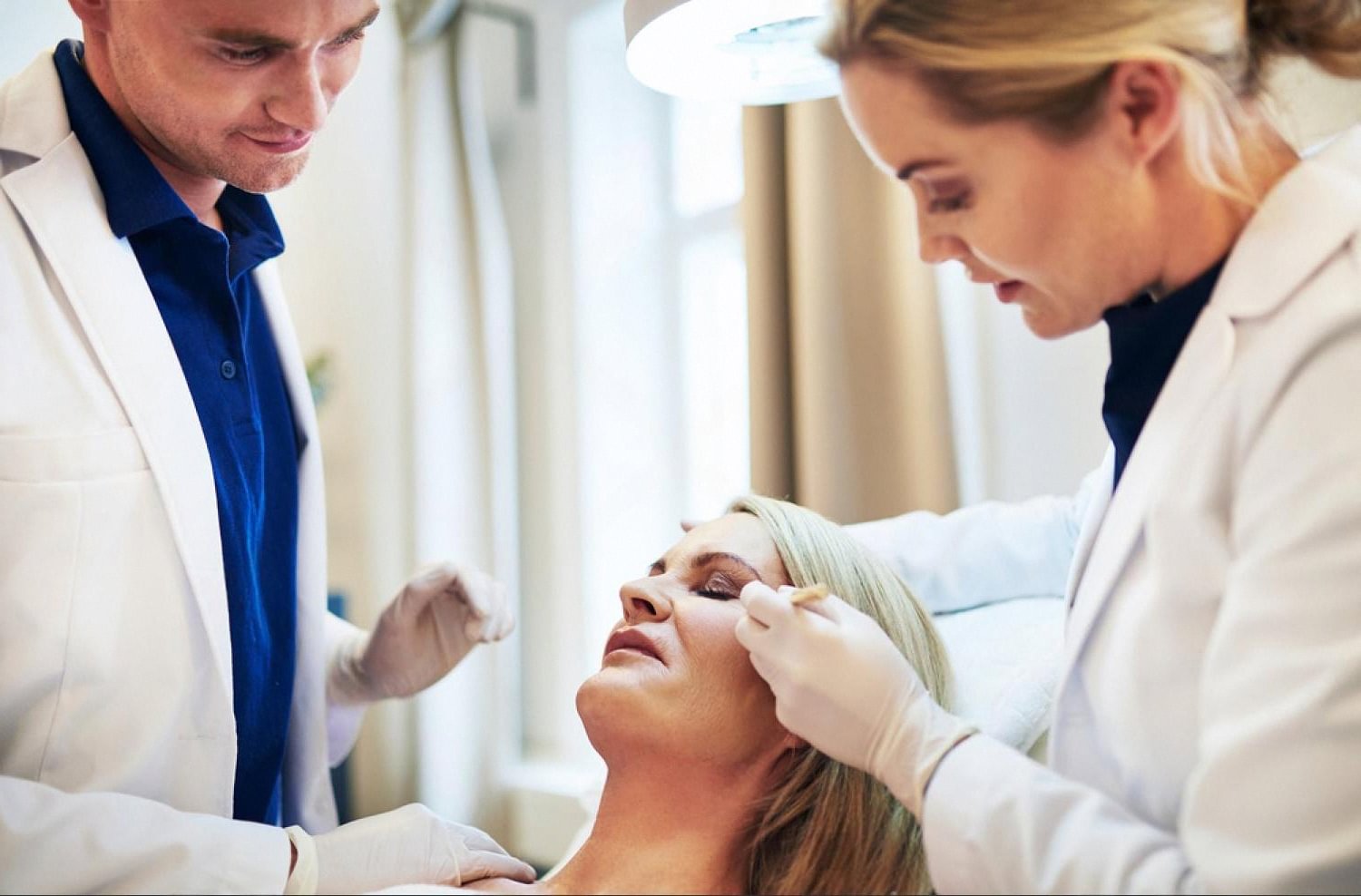
A dermatologist does more than look. They ask about your medications, family history, sun exposure, hormones, stress, sleep and diet. They feel a lesion for firmness, warmth and tenderness. They know that a smooth brown spot in Dubai sun could be a benign solar lentigo or an early melanoma, and they know which one deserves a scalpel today. An app that has only seen your selfie has none of that context.
There is also the treatment side. Prescription retinoids, hydroquinone, oral isotretinoin, laser plans and injectable protocols are regulated for good reason. The Dubai Health Authority requires a licensed practitioner to prescribe and administer them. No consumer app is legally allowed to hand you that plan.
- Use AI skin analysis to track your skin monthly and catch changes early.
- Book a dermatologist for any new, changing, bleeding or itchy lesion, regardless of what an app says.
- Check the app’s privacy policy before uploading a photo. If you cannot find one, do not upload.
- Ask your clinic which imaging system they use and whether your scans are stored on servers inside the UAE.
- Treat AI product recommendations as a starting point, not a prescription. Patch test everything.
- For anything involving injections, lasers or prescription actives, insist on an in-person consultation.
Where the technology is heading
The next generation of tools is trying to fix the biggest weaknesses. New datasets are being rebuilt to include broader skin tones. Regulatory frameworks in the EU, UK and increasingly the UAE are pushing developers to prove clinical performance before marketing an app as diagnostic. Multi-modal models are combining photos with dermatoscopy, patient history and genetic markers, which is closer to how a real dermatologist thinks.
The realistic future is not a robot dermatologist. It is a dermatologist who sees more patients, more accurately, because a well-trained assistant did the measuring, the flagging and the paperwork first. That is a genuinely better clinic experience, and it keeps the human judgement where it belongs.
Frequently asked questions
Is AI skin analysis accurate for darker skin tones common in the UAE?
Accuracy varies significantly. Many AI models were trained on datasets dominated by lighter skin, so conditions like melasma, keloids and post-inflammatory hyperpigmentation, which are common in South Asian, Arab and African skin, can be under-detected or misclassified.
Newer clinical systems used in UAE dermatology clinics are being retrained on more diverse datasets, but the safest approach for darker skin is still an in-person consultation with a dermatologist experienced in your skin type.
Can an AI app diagnose skin cancer from a phone photo?
Some apps can flag a lesion as suspicious and suggest you see a doctor, and the best models perform surprisingly well on obvious melanomas. However, no consumer app is a substitute for a dermatoscopic exam and, when needed, a biopsy.
If a mole is new, changing, asymmetric, larger than 6 mm, itchy or bleeding, book a dermatologist regardless of what the app says.
Are my selfies safe when I use a skin analysis app?
Facial images are biometric data. Under the UAE Personal Data Protection Law, they require explicit consent and secure handling. Reputable clinics store scans on protected medical systems governed by DHA or DoH rules.
Free consumer apps vary widely. Read the privacy policy, check where the data is processed, and avoid uploading photos to services that do not disclose their retention and sharing practices.
Will AI eventually replace dermatologists entirely?
Almost certainly not. AI will keep taking over repetitive tasks: measuring pigmentation, counting pores, comparing before-and-after photos, flagging lesions for review. That frees the dermatologist to focus on diagnosis, treatment planning and procedures.
The medical, ethical and legal responsibility for a diagnosis stays with a licensed clinician. The future is dermatologist plus AI, not dermatologist versus AI.
Should I trust AI product recommendations for my skincare routine?
For routine concerns like mild dryness, oiliness or general anti-ageing, AI recommendations are usually reasonable and a good starting point. They tend to over-recommend, though, because more product sales benefit the platform.
For active ingredients like retinoids, exfoliating acids at higher strengths, hydroquinone or anything prescription, get a dermatologist’s plan. Overloading the skin barrier is a common problem when people follow algorithm-generated routines without professional input.
How often should I use AI skin analysis to track my skin?
Monthly is a sensible cadence for most people. Take the photo in the same lighting, at the same angle, without makeup, and ideally at the same time of day. Consistency matters more than the specific app.
If you are going through a treatment course, laser sessions, prescription actives or a new routine, your clinic’s imaging system will usually give you a more reliable timeline than a consumer app.